Highlights
MIRACLES—Mystics panels 11/02/08 12:12 Page 13 French philosopher Jean Guitton left us a forceful witness on Marthe Robin: "She was a peasant of the French countryside, who for thirty years took neither food nor drink, nourishing herself instead on the Eucharist alone, and every Friday she relived the pains of the Passion of Jesus through her stigmata. A woman who perhaps was the most unusual, most extraordinary and disconcerting of our age, but whom even in the age of television remained unknown to the public, buried in a profound silence, From our first meeting, I understood that Marthe Robin would have been a 'sister of charity,' always, as she was for thousands of visitors. arthe Robin was born on March 13, 1902, in Chåteauneuf-de-Galaure (Drome), in France, to a family of peasants, and she spent her entire life in her parents' home, where she died February 6, 1981.
Marthe's entire existence revolved around the Eucharist, which for her was "the one thing that cures, comforts, serious neurological illness, Marthe found it almost impossible to move, especially to swallow because those muscles were affected. Moreover, due to an eye illness, she was forced to live in almost absolute darkness. According to her spiritual director, Father Don Finet: "When she received the stigmata, in early October 1930, Marthe had already lived with the pains of the Passion since 1925, the year in which she offered herself as a victim of love.
That day, Jesus said she THE SERVANT OF GOD MARTHE ROBIN FRANCE, 1902-1981 oxoa your isolation and your solitude, and the solitude in which I place you all, without reservation, for my priests. Offer yourself to the Father with me, for them; don't be afraid for having to suffer too much for my priests; they have a pressing need for those things that I am about to do through you for their advantage. was chosen, like the Virgin, to live the Passion more intensely.
No one else would experience it so completely. Every day she has endured more pain, and at night she does not sleep. After the stigmata, Marthe was not able to drink or eat. The ecstasy lasted until Monday or Tuesday.' all the sufferings for love of Jesus th Redeemer and the sinners He wanted to save.
The great philosopher Jean Guitton, recalling his meeting with the visionary, wrote: "I found myself in that dark room of hers, confronted by the best-known contemporary critics of the Church: Novelist Anatole France (a critic whose books were condemned by the Vatican) and Dr. Paul-Louis Couchoud, a disciple of Alfred Loisy (an excommunicated priest whose books were condemned by the Vatican) and author of a number of books denying the historical reality of Jesus. From our first meeting, I understood that Marthe Robin would have been a 'sister of charity' always, as she was for thousands of visitors.
In fact, beyond the extraordinary mystical phenomena, extremely significant was the work of evangeliza- tion that Marthe managed to accomplish, despite her condition, thanks to the help of Father Finet, with whom she founded sixty "Foyers of Charity" groups (centers or homes of light, charity and love) throughout the world.
🔬 Scientific & Forensic Investigation
Rigorous histological, immunological and chromatographic analysis verified authentic human tissue with no chemical preservatives.
Relic Gallery & Historical Records
Fotografias em alta definição das sagradas relíquias, basílicas e documentos históricos catalogados por São Carlo Acutis. Clique para ampliar.
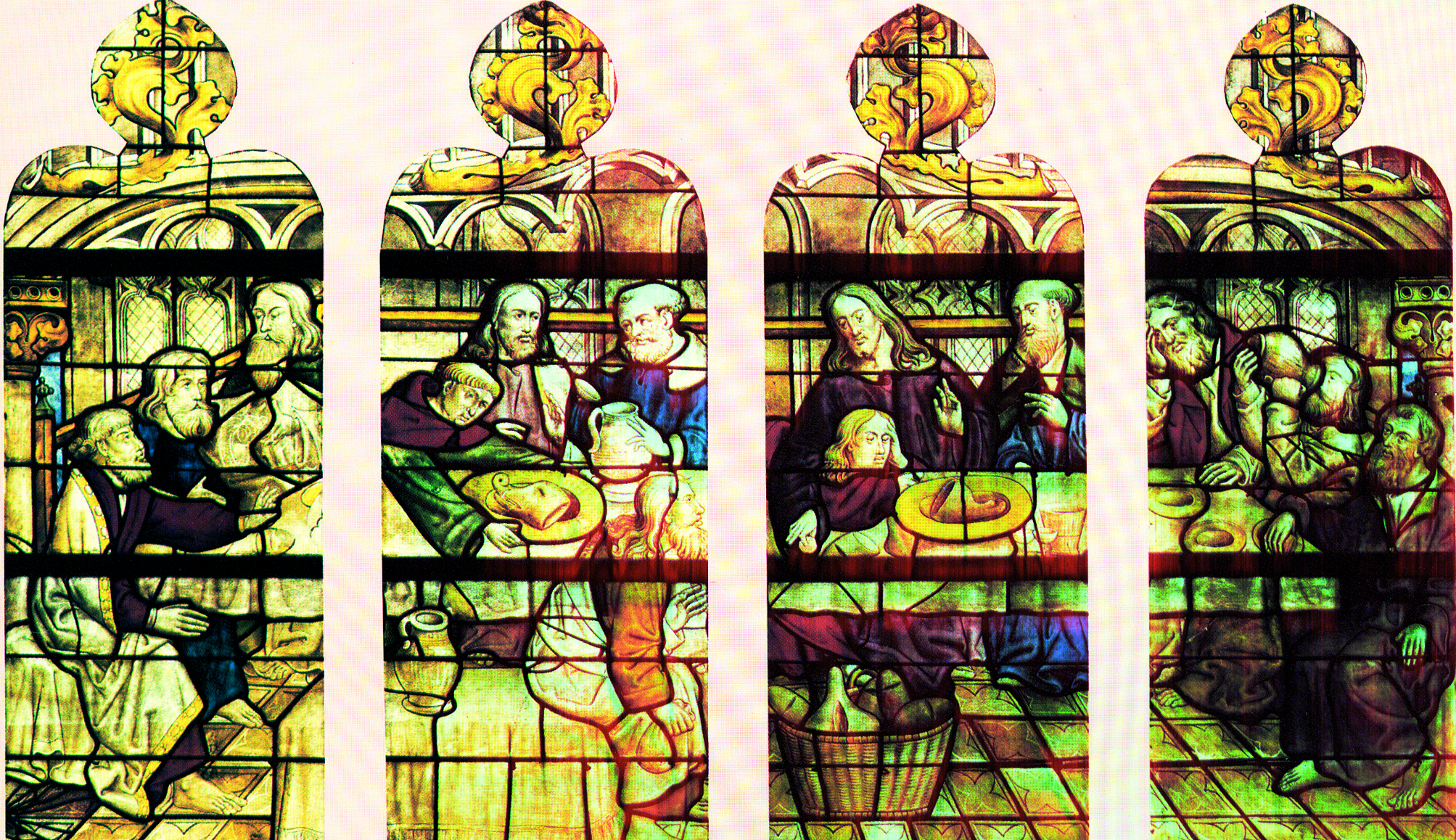
Historical artwork and preserved documentation of the Eucharistic Miracle of Robin
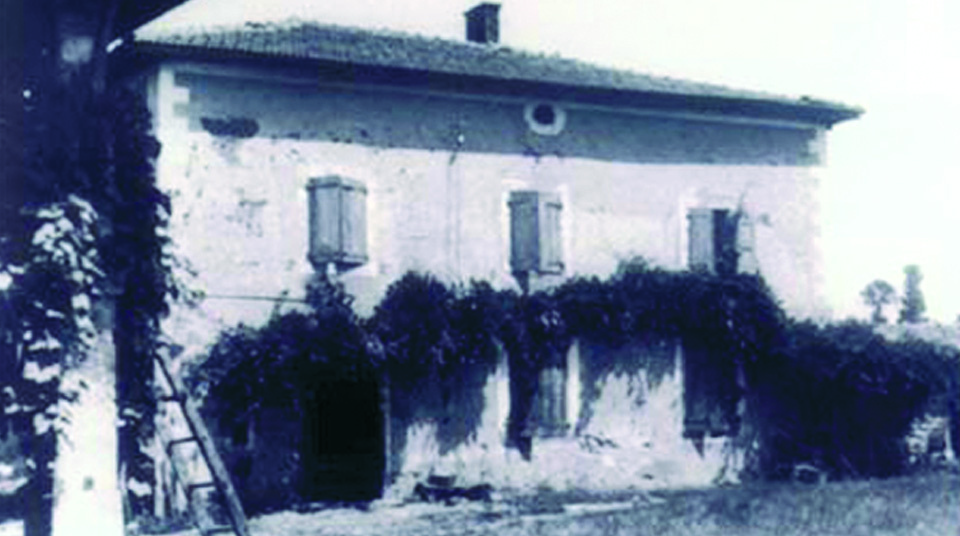
The House where Marthe lived all of her life, Chåteauneuf-de-Galaure, Drome (France)
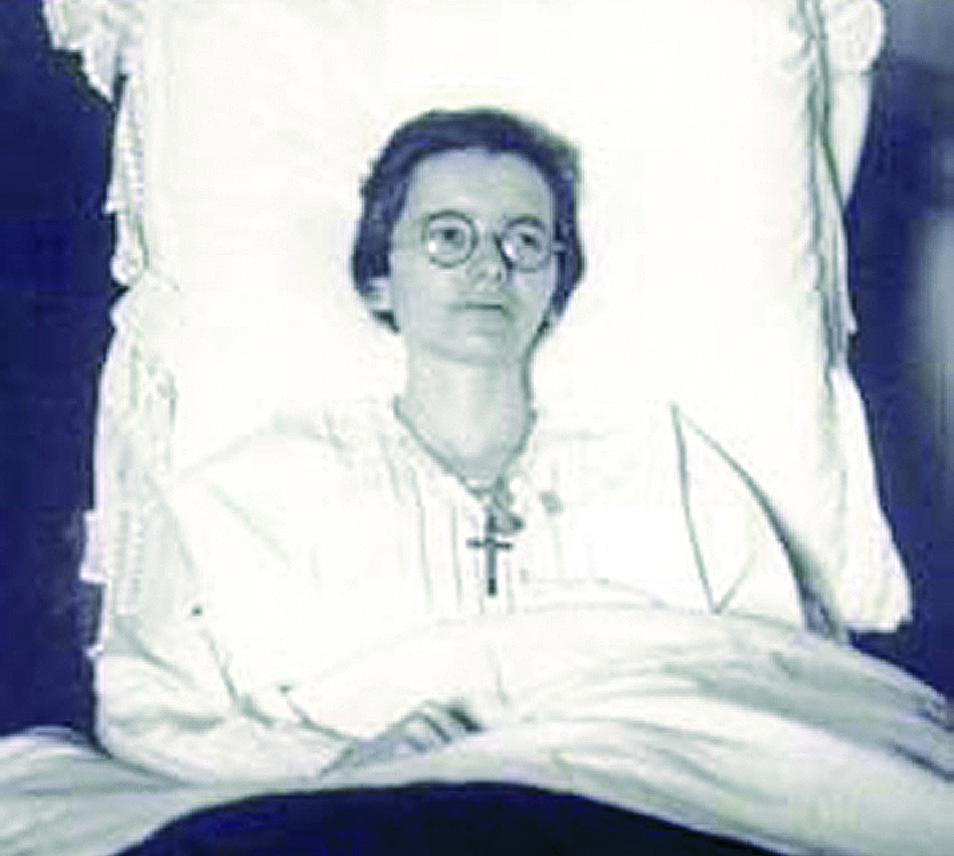
Jesus said to Marthe when she was in a state of ecstasy: "My priests, my priests; give everything for them. My Mother and I love them very much. Give me all your sufferings, all of you who suffer in this moment, all of you who want to be immersed in my love. Give me
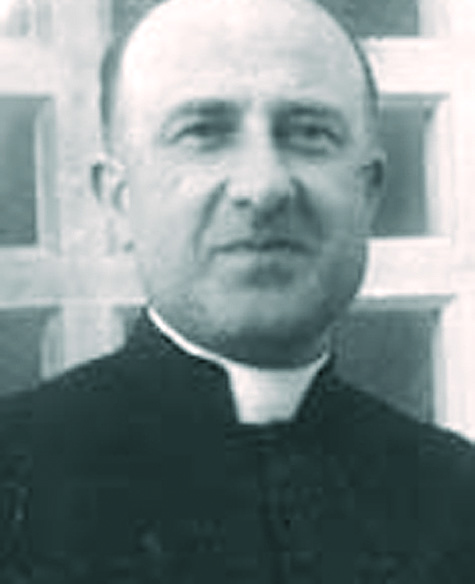
Father Finet, Marthe's Spiritual Director and founder of the "Foyers of Charity"
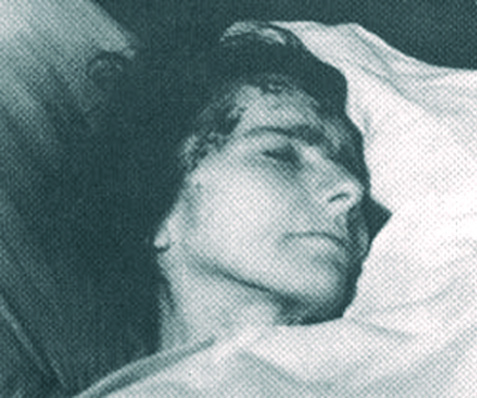
Marthe received the gift of the stigmata from the Lord. Beginning in 1930, every Thursday evening she relived the suffering of Jesus at Gethsemane
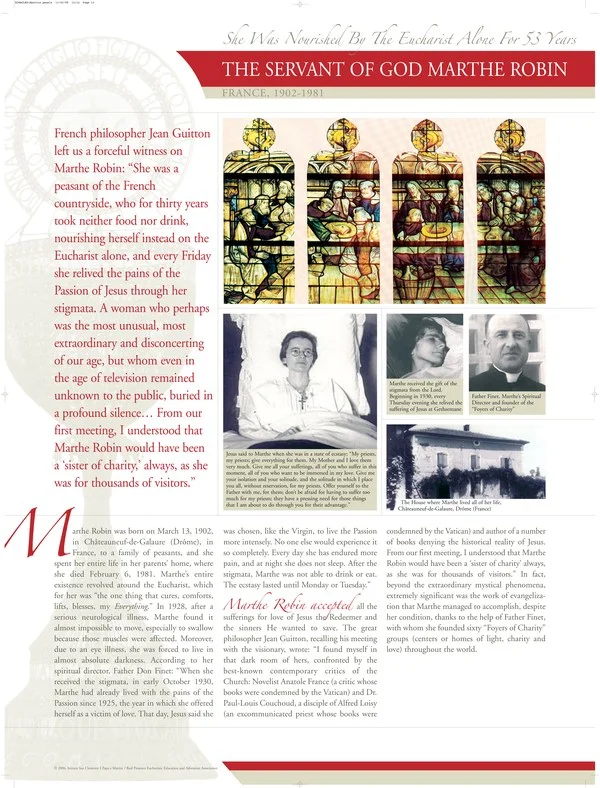
Original Exhibition Panels by Saint Carlo Acutis (300 DPI)
Inspecione a composição gráfica original em alta resolução (300 DPI, formato 60×80 cm), com o design e tipografia preservados exatamente como idealizados pelo autor.