Highlights
MIRACLES—Mystics panels 11/02/08 12:12 Page 12 GERMANY, 1898-1962 Teresa Neumann's life changed radically after her miraculous recovery from paralysis and total blindness at the age of 25, About a year later, she received the stigmata and began fasting, which lasted 36 years until her death, Her only nourishment was the Holy Eucharist and for this reason the Nazi authorities, during World War 11, withdrew her food rationing card and gave her a double rationing of soap to wash her towels and clothing, because every Friday she would be drenched in Blood while she was in ecstasy, experiencing the Passion of Christ, Hitler was very fearful of Teresa, eresa Neumann was born in Konnersreuth Germany, on April 8th, 1898 from an extremely poor Catholic family. Her greatest ambition was to become a missionary in Africa but that was not possible as she was a victim of an accident at the age of 20 when a horrible fire broke out in a nearby plant and Teresa went to help and the flames, she got a horrible lesion in her spinal cord that caused a paralysis in both her legs and complete blindness. Teresa then passed her days in prayer, but one day her miraculous recovery occurred in the presence of Father Naber who wrote: "Teresa described a vision of a great light and an extraordinary, sweet voice that was asking her if she wished to be healed.
Teresa gave the most surprising answer when she replied that to her it would not make any difference whether she voice told her that 'that very day she would receive a small joy; the healing of her infirmities, but that she would still have a lot of suffering to endure in her future. Teresa lived in fairly good health, but in 1926 her most impor- tant mystical experiences started and lasted until the day she died. She received the stigmata, and she began a complete fasting, with the Eucharist as her only nourishment.
Father Naber, who administered Communion to Teresa every day, wrote: "In her, God's promised word is accomplished: 'My Flesh is real food and my Blood is a true drink'". Teresa offered the Lord her physical suffering - due to the loss of blood caused by the Resurrection. This suffering was offered, through her intercession, for sinners that asked for help.
Every time she would be called to a person's death bed, she would be witness to that soul's judgment, as it is usual to happen right after death. Ecclesiastical authorities performed many examinations in regard to Teresa's continuous fasting. Carl Strater, S.J., directed by the Bishop of Ratisbonne, studied and examined the life of the stigmatized Teresa and confirmed: "The significance of Teresa Neumann's fasting is to show the people of the world the value of the Holy Eucharist, to make the world understand that Christ is actually present in the bread of the Eucharist and that through the Holy Eucharist, physical life can actually be preserved.'
🔬 Scientific & Forensic Investigation
Rigorous histological, immunological and chromatographic analysis verified authentic human tissue with no chemical preservatives.
Relic Gallery & Historical Records
Fotografias em alta definição das sagradas relíquias, basílicas e documentos históricos catalogados por São Carlo Acutis. Clique para ampliar.
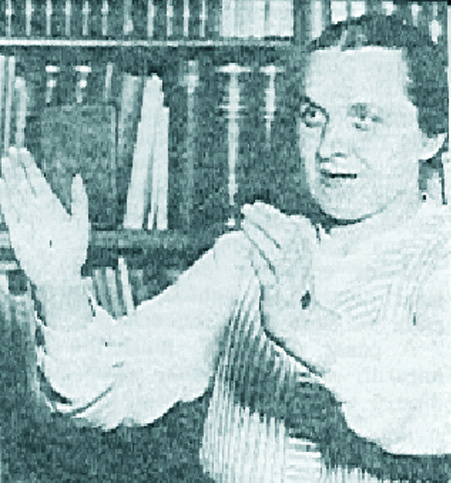
Historical artwork and preserved documentation of the Eucharistic Miracle of Neumann
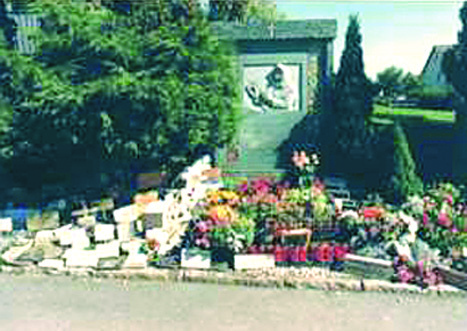
at Konnersreuth
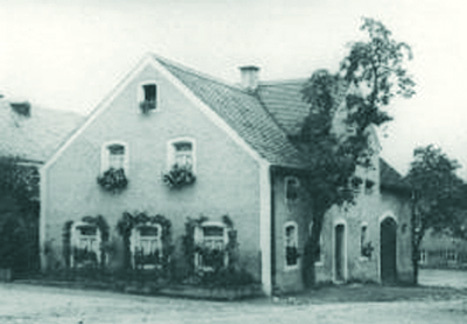
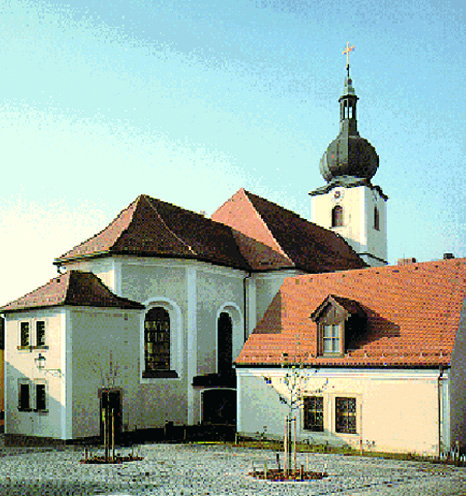
Teresa's parish Teresa's Paternal House
Historical artwork and preserved documentation of the Eucharistic Miracle of Neumann
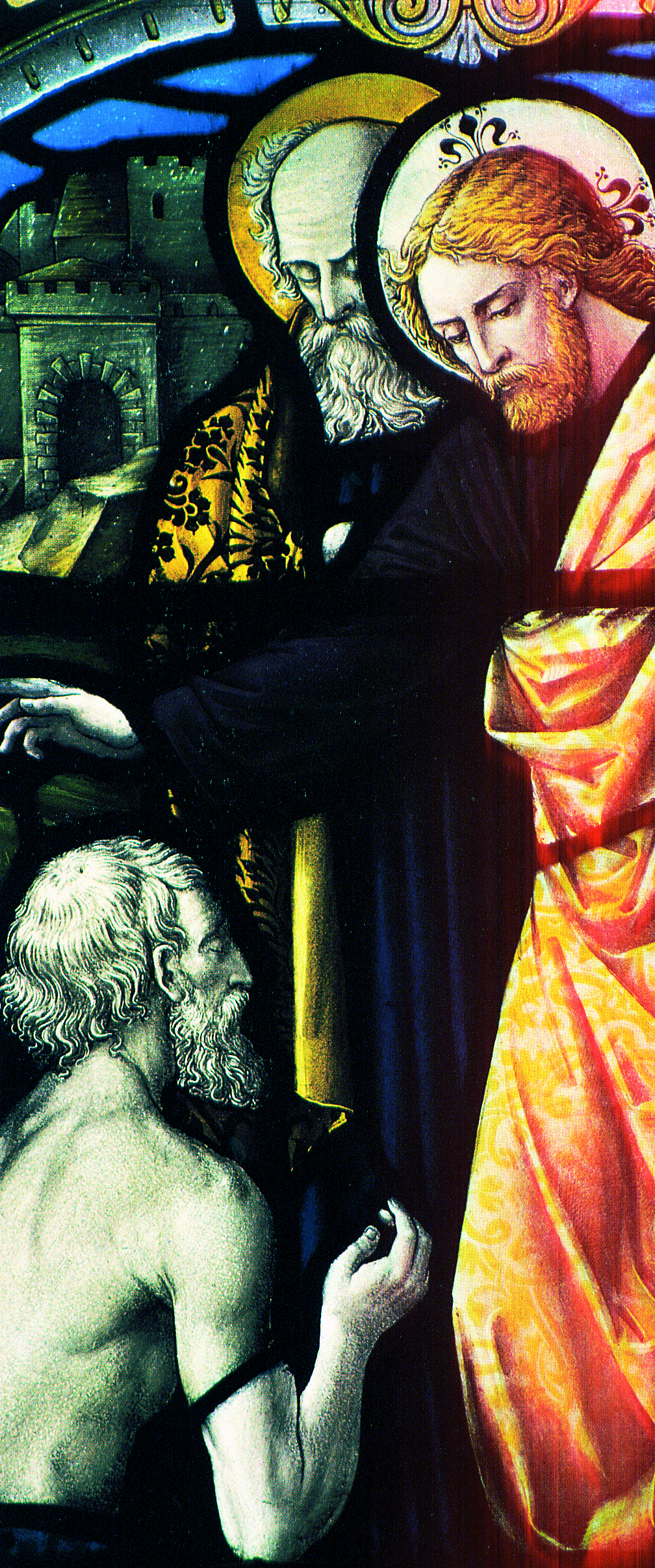
stigmata - that started every Thursday during the day when Jesus' Passion started, until Sunday, His

Teresa at 4 years old
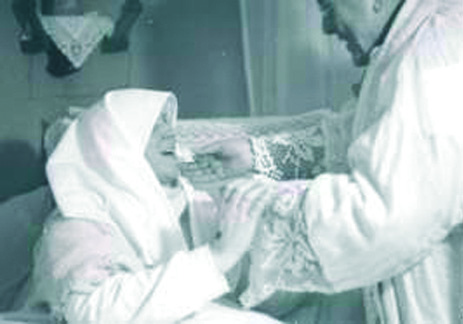
Teresa while she is receiving Holy Communion on Easter Sunday 1934
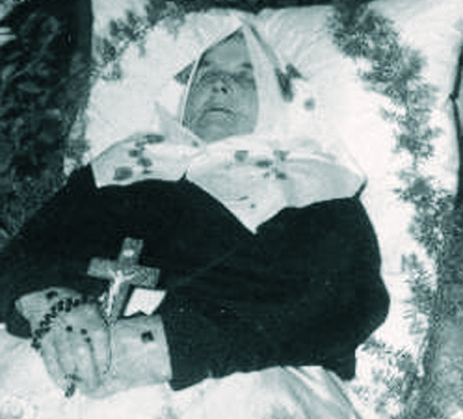
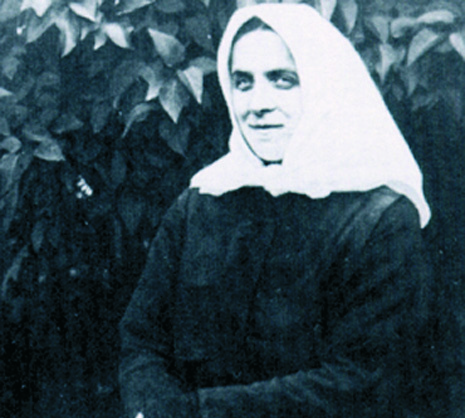
Teresa dies at Konnesreuth 1962 would be healed, stay the way she was or even die, as long as it was the will of God. The mysterious
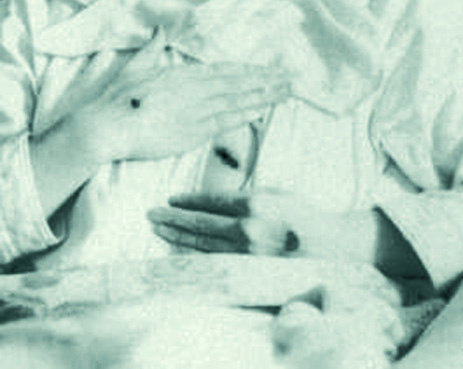
Teresa Neumann: Stigmata on heart and hands (Medical Photograph, 1926)
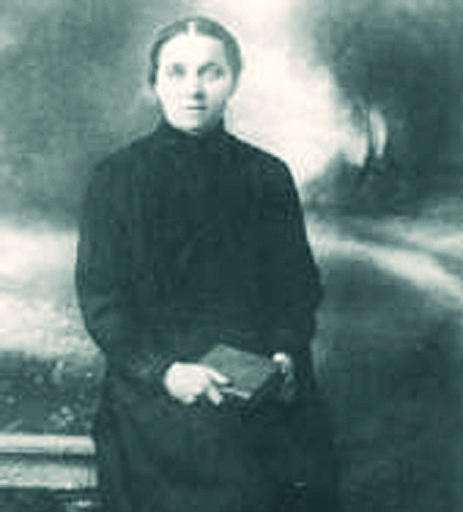
Teresa after her infirmities
Historical artwork and preserved documentation of the Eucharistic Miracle of Neumann
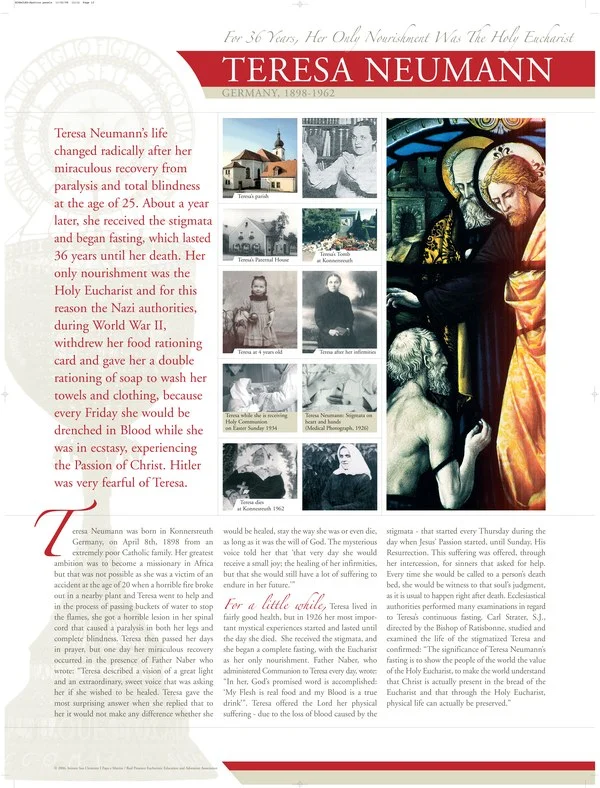
Original Exhibition Panels by Saint Carlo Acutis (300 DPI)
Inspecione a composição gráfica original em alta resolução (300 DPI, formato 60×80 cm), com o design e tipografia preservados exatamente como idealizados pelo autor.